
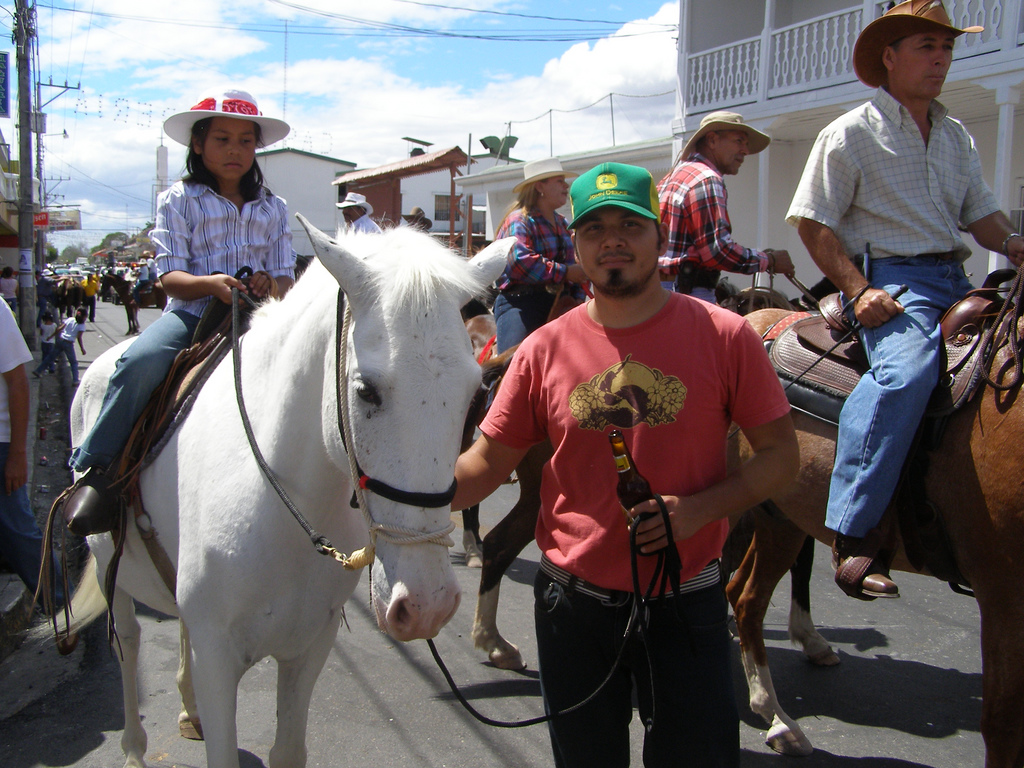
Jacó Tope 2026 brings Costa Rica’s horse-parade tradition to town tomorrow, Saturday, November 14, from noon. Expect an afternoon built around horses, riders and a community celebration — and plan your journey before heading downtown.
Traffic alert: Avenida Justo Pastor Díaz will be closed from 3 a.m. until 11 p.m. on Saturday. That is a 20-hour closure, covering most of the day and evening. A Municipalidad de Garabito notice shared by the event host says the closure allows for preparations, the event itself and its conclusion.
What is a tope?
Pronounced roughly “TOH-peh,” a tope is a festive horseback parade. Riders bring their horses through town while people gather along the streets to watch. The appeal is the procession itself: horsemanship, carefully prepared mounts, riding clothes and the chance to meet friends and neighbors.
For visitors who know Jacó mainly through surfing and beach life, Saturday offers a different view of Costa Rica. The horse takes center stage, connecting a coastal town’s festivities with the country’s rural traditions.
The culture behind Costa Rica’s topes
Topes have deep connections to cattle ranching and the sabanero, the skilled horseman associated with Guanacaste’s working ranches. Horses helped move livestock and people; public celebrations gradually gave those working skills a festive setting.
There is no single, simple origin story. In a 2026 Universidad Nacional account, researcher Daniel Matul describes overlapping roots in colonial horseback processions, cattle movements and civic festivities. He also highlights the contributions of enslaved African people to riding, horse training and animal care — part of a history more complex than the familiar cowboy imagery.
Today, the gathering is also social: families, riders and spectators share a celebration of local identity. Traditions differ between communities. Liberia’s historic Tope de Toros, for example, involves escorting cattle through town; that specific tradition should not be confused with every modern horse parade.
Jacó Tope 2026: Saturday’s event details
- Date: Saturday, November 14, 2026.
- Advertised start: 12 noon, Costa Rica time.
- Location: Jacó, Garabito. The Planeá Tuanis event listing identifies the south side of Mayca; riders should confirm the precise assembly point and arrival instructions with the host.
- Rider registration: Free, according to the host’s current announcement.
- Advertised activities: The tope, concerts, an ox-cart parade and stages. Individual performance times and a full artist lineup were not available in the announcements reviewed.
- Event host: Campo Ferial La Purruja Quebrada Amarilla Jaco, whose public Facebook event carries the latest event information.
- Wider festivities: Fiestas Jacó Vive 2026 runs November 12–22, as advertised by the Asociación de Desarrollo Integral de Quebrada Amarilla.
The development association’s own announcement also confirms November 14 and the noon start. Free rider registration does not establish the price of every separate activity during the wider festival.
Pastor Díaz closure: plan ahead
The road closure begins nine hours before the advertised start. Do not count on driving down Pastor Díaz for a morning errand, an afternoon hotel arrival or an evening pickup.
Arrange deliveries and essential trips ahead of time. If you are staying downtown, ask your accommodation where vehicles can reach it during the closure. Agree on an accessible meeting point with your taxi, shuttle or tour operator, and allow extra travel time.
The municipal notice does not give a block-by-block closure map or an official detour. Follow posted signs and traffic officers’ directions. The 11 p.m. time is the announced road-closure endpoint, not a published concert finishing time.
For watching the parade, bring drinking water, sun protection and rain protection. Give horses room, keep children clear of the procession and ask a rider before approaching an animal. Choose a viewing spot that leaves entrances and pedestrian access clear.
Traveling in from the airport this weekend? Our San José Airport to Jacó transport guide can help with the wider journey; confirm Saturday’s final drop-off separately because of the closure.
Event information checked November 13, 2026. Consult the linked organizer announcements for changes.
Cover photo: Horse-parade participants in Liberia, Costa Rica, February 2009. Archive photograph illustrating Costa Rican equestrian culture; not the 2026 Jacó event. Photo: José David Leiva (Daflai), via Wikimedia Commons, CC BY 2.0. Original photograph, unaltered.


Conversation